
By Ceyda Güneş
“Everyone sees the Temple. But few stay long enough to hear the whispering olive groves, forgotten chapels, and stories that live beyond the columns.” Local historian, Dr. Levent Aksoy
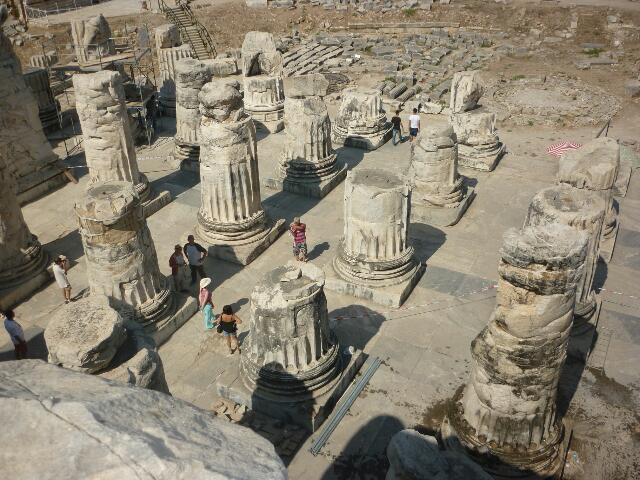
Tourists come to Didyma for the awe-inspiring Temple of Apollo, with its towering columns and mythic echoes. They snap their photos, perhaps grab a coffee across the road, and then—too often—they leave.
But what lies beyond Apollo? Beyond the temple’s stone frame, Didyma unveils its real face: a living tapestry of forgotten footpaths, olive-blanketed hills, underground springs, and a culture still breathing through silence.
Sacred Olive Trails and Lost Chapels
Few visitors realize that the land surrounding the Temple was once a sacred passageway connecting Didyma to Miletus via the Sacred Road. Today, segments of this ancient path can still be walked, worn down by sandals, time, and rain.
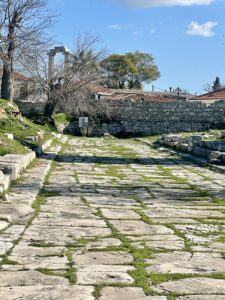 Along these forgotten routes, you’ll find Byzantine chapels half-swallowed by vines, shepherds’ stone huts, and ancient fig trees growing in the ruins of once-occupied homes. Locals call this area “Taşlar Altı” (Beneath the Stones), where legends mix with agriculture and archaeology.
We spoke with Elif Kaya, a retired schoolteacher who now gives free walking tours around lesser-known Didyma: “Most people don’t know there’s an early Christian baptismal pool just behind the old theatre wall. It’s not even marked. You have to feel your way into the land here.”
And Nihat Duran, a 79-year-old olive farmer from Yoran (modern-day Mavişehir), remembers a time when Apollo’s shadow stretched all the way to the sea: “We played in those ruins before they had fences. The temple was part of the village. We used to tie our donkeys to the columns!”
Archaeologists have recently uncovered signs of Roman bath structures, a possible underground cistern system, and pre-Hellenistic ruins near the edge of the Didyma complex. But funding and attention often remain centered on the Temple alone.
According to Dr. Levent Aksoy, “There is more history under Didim than above it. But who will dig if no one looks beyond the postcard?”
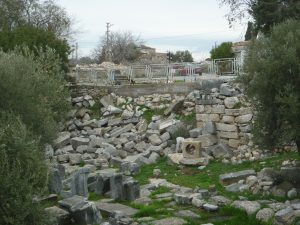 Didyma is not just a ruin—it’s a living village. Walk a few meters from the Apollo site and you’ll find grandmothers drying sage and oregano under sun-bleached balconies, a 92-year-old weaving Yörük motifs into kilims by memory, goats grazing among ancient stones without knowing the weight of history beneath their hooves. This is the real Didyma, a blend of myth and mud, sacredness and simplicity.
Didyma Off the Map: What to Explore
The Sacred Road Walk – From Apollo to Miletus, passing ancient roadside altars
Yoran Church Ruins – Early Christian remnants near Mavişehir
The Forgotten Cistern – An unmarked site near Hisar Mahallesi
Olive Grove Labyrinths – Farming paths between Akköy and Didyma, some with Roman stone walls still standing
Yes, the Apollo Temple is a masterpiece. But Didyma doesn’t live in the stone. It lives in the spaces between the stones. In unspoken stories, preserved traditions, and humble homes still echoing with the past. To know Didyma, walk slowly, speak with elders, and listen to what’s not in the guidebook.