
By Laura Bower
If you’ve been monitoring the coastline around Didim, you might sometimes see a group of people clothed in matching t-shirts, baseball caps pulled low over their eyes, tooled up, piling out of a van like the Mission Impossible team, scouring the coast and filling up bags and bags of litter as they go.
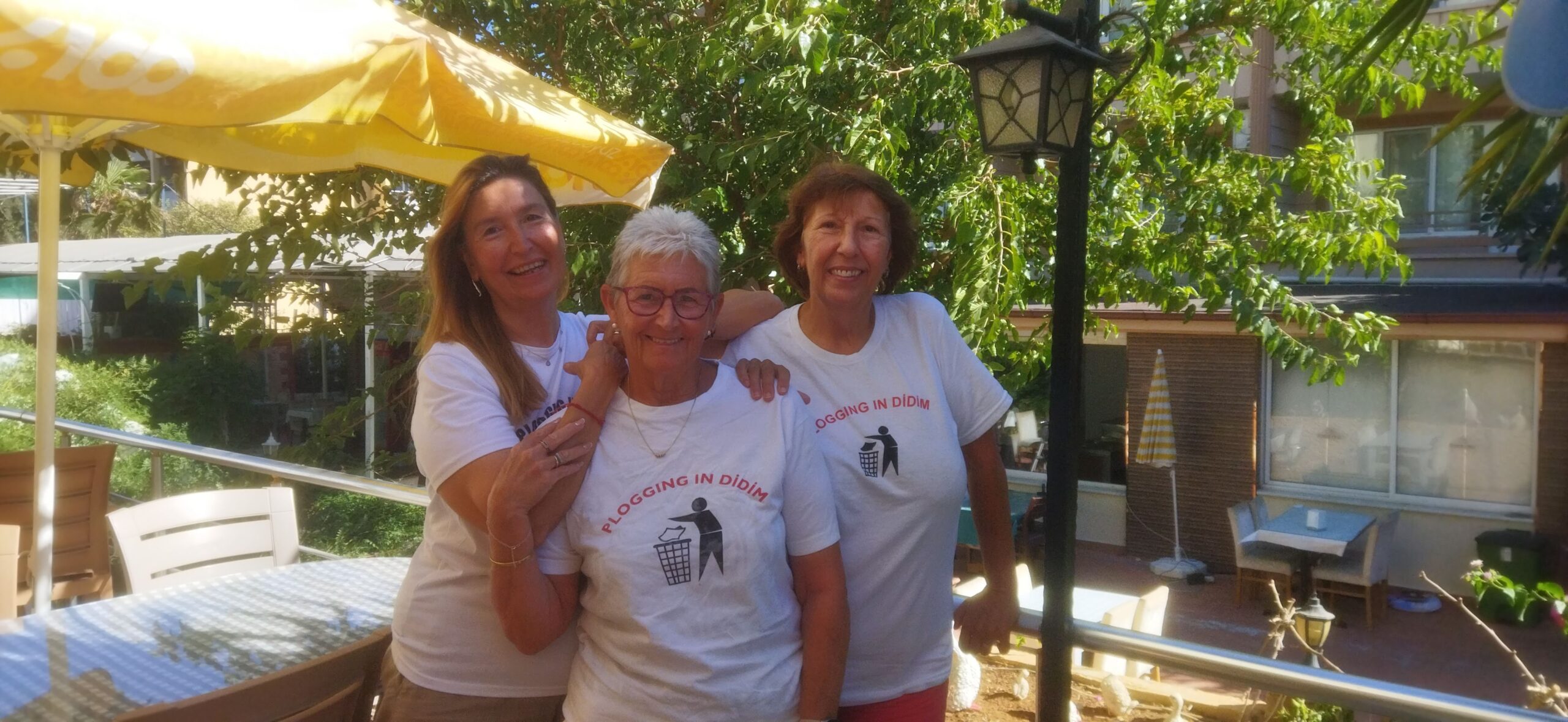
Plogging in Didim is a group of Turkish and foreign residents, who meet weekly at LC Waikiki outside of the summer months, on a mission to clean up the area’s beautiful bays and beaches.
The group has been running since June 2018, the accidental creation of Beverly Çakmakçı. Bev, who does Turkish lessons along with her husband Metin, had a friend who was Swedish and a friend who was Italian. Both, coming from countries known for their pristine coastlines, were appalled by the amount of litter on Didim’s beaches. So Bev introduced them, and they all decided to try to form a cleanup group.
 They put the word out on Facebook, had a meeting, and the first plog took place one month later, in July 2018. Seven people took part, thinking they’d pick up a little rubbish, drop it into the nearest bin and go off for a nice cup of tea.
They collected an astonishing 40 bags of rubbish on that first plog, not to mention two cases of sunstroke, and Plogging in Didim was born.
The word Plogging comes from the Swedish for picking up and jogging, but Didim’s ploggers joke that they’re more like plodders than joggers – jogging is probably more suitable for the Swedish climate than Didim’s!
But all the bending over and standing back up involved ensures that the ploggers of Didim stay limber nonetheless. This year Plogging in Didim members are on track to collect 4 tonnes of rubbish by the end of this year, not including discarded carpets, tyres, and anything else too big to fit into a plastic rubbish bag.
There are two remaining original members, Bev and Anne Baxter-Cooper, 200+ online members and around 20 regular participants, including Nurhan Ebil Gürasma, the main liaison with Didim Council.
Regular Plogging in Didim participants are mainly locals, although there are members as far away as the US and Canada who take part when they are visiting.
The group started off entirely self-funded, buying their own litter-pickers and piling into their own cars to go to that week’s designated cleanup area. Oracle has been sponsoring their t-shirts since before COVID, and since 2020, Didim Council provides transport to and from the cleanup site, black rubbish bags, gloves and spare litter-pickers.
The group is very sociable and a plogging session always ends with a post-plog çay at the nearest café. Inevitably, someone will bring home-cooked treats to share. They celebrate birthdays, meet up at New Year’s and always seem to have a reason to get together and have fun.
Of course, the ploggers sometimes get to see a darker side of Didim. There are spots along the coastline used for refugee launches, where they find bedding, waterproof bags and boat pumps. Sometimes they find personal items that have been washed ashore, lifejackets, a rucksack with a name, a wallet with pictures of someone’s children. Those items are handed into the police, but nothing is heard of their owners.
 Once the ploggers themselves were mistaken for refugees by someone who saw them being dropped off by van and moving towards the sea carrying large black plastic sacks. The Coast Guard roared up by boat, landed and approached them.
Nurhan, a Turkish lady with a demeanour that commands respect, explained that the van belongs to Didim Council and the black bags were for collecting litter left by beachgoers, and they were left to go on their way. The Marti Sitesi residents have been left to clean up their own litter since then.
The group usually meets on Wednesday mornings at 9.30am, goes to that week’s site, spends an hour cleaning up, then goes for refreshments and a chat before returning to town. They do extra plogs on weekends – there’s a joint plog with Didim Marina twice a year where they are joined by marina staff, and treated to sandwiches and beer at the marina afterwards – always very popular!
They’ve also done joint plogs with schools, the council, the local university, and had a regular plog with Sunshine boat out to the island in the middle of the bay until recently. Bev says they are hoping to come to a similar arrangement with another boat to carry on the work there.
The ploggers also take part in a tree-planting ceremony each year on 11 November in concert with Didim Jandarma or the Kaymakam. There are also some spinoff groups – a couple who live close to Didim’s waterpark site plog every morning.
Anne, Nurhan and Bev agree that cleaning up the beaches is a Sisyphean task that will never end. People will always drop litter, and it will always wash onto shore from the sea. But beyond improving the beaches for the next week or month, plogging is essential to raise awareness.
People see them, stop them, and ask what they’re doing. They mention Voices’ role in publicising each week where the ploggers have been and how much they’ve collected, and they hope people will start to take responsibility themselves, reconsidering what they do with the litter in their hands or the litter that they see.
A video of the ploggers on the website for Turkish national newspaper Hürriyet got 100,000 hits. It all helps to get people thinking about what they themselves can do to make their local area a nicer place to be.
If you’d like to take part or support the group, they can be found on Facebook as Ploggers in Didim. With each plogger filling one plastic sack per plog, you can really make a difference!