
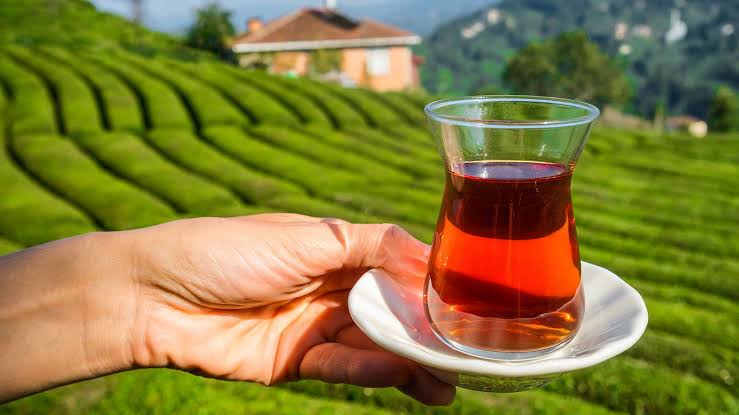
If you spend even a short time in Didim, one thing becomes very clear: tea is everywhere. Whether you’re visiting a neighbour, waiting in a shop, relaxing at a café or finishing a meal, the chances are high that someone will offer you a small glass of Turkish tea or “çay.” Understanding Turkish tea culture offers a wonderful insight into everyday life in Türkiye.
A nation of tea lovers
Türkiye is one of the biggest tea-drinking countries in the world. In fact, it consistently ranks first globally for tea consumption per person, with Turks drinking several kilograms of tea per year on average. Tea is the most consumed hot drink in the country, even beyond coffee, which once dominated social life during the Ottoman period.
Today, tea is deeply woven into daily routines. Tea is drunk at breakfast; tea breaks are common during the working day; friends meet over tea in cafés and tea gardens; and guests are welcomed with tea in homes and shops. Tea acts as a social glue, bringing people together.
From the Black Sea to your glass
 Most Turkish tea is grown along the Black Sea coast, particularly in the province of Rize, where the climate is perfect for tea cultivation. Tea farming became a major industry in the early years of the Turkish Republic, and today Türkiye is among the world’s largest tea producers. The typical Turkish tea is a strong black tea made from leaves of the Camellia sinensis plant. When brewed properly, it produces a rich, deep red colour – the sign of a perfect cup.
The Art of brewing
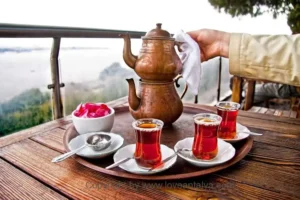
Making proper Turkish tea is something of an art. Instead of a single teapot, Turks traditionally use a double teapot called a “çaydanlık.” The lower pot boils water while the upper pot contains tea leaves that brew slowly with the steam.
When serving, the strong tea concentrate from the top pot is poured into the glass and diluted with hot water from the bottom pot. This allows everyone to choose their preferred strength, koyu or açık – stronger or weaker. The result is a perfectly balanced cup tailored to each person’s taste.
Why Turkish tea is served in small glasses
One of the most recognisable symbols of Turkish tea culture is the small tulip-shaped glass known as the ince belli bardak (“thin-waisted glass”). These elegant glasses serve several purposes: they allow you to admire the tea’s deep colour; the narrow waist helps keep the tea hot; and the rim stays cool enough to hold. Tea is typically served very hot, often with small cubes of sugar but rarely with milk or lemon.
Tea and Turkish hospitality
 For many foreigners living in Türkiye, the most memorable part of tea culture is the hospitality surrounding it. Offering tea is a sign of friendship, respect and welcome. In Turkish culture, sharing tea is less about the drink itself and more about taking time to connect with others.
Across Türkiye you will find tea houses and tea gardens where people gather to relax, talk and play games like backgammon or okey. These places are an essential part of community life. On warm evenings you will often see locals sitting together for hours with a tray of tea glasses, enjoying conversation and the sea breeze.
A tradition recognised by UNESCO
The cultural importance of tea in Türkiye is so significant that in 2022 the traditional culture of tea in Türkiye and Azerbaijan was added to the UNESCO Intangible Cultural Heritage list.
In Didim, as in the rest of Türkiye, tea is far more than a drink. So next time someone offers you a glass of çay, take it as more than just refreshment. It’s an invitation into one of Türkiye’s most cherished traditions.