
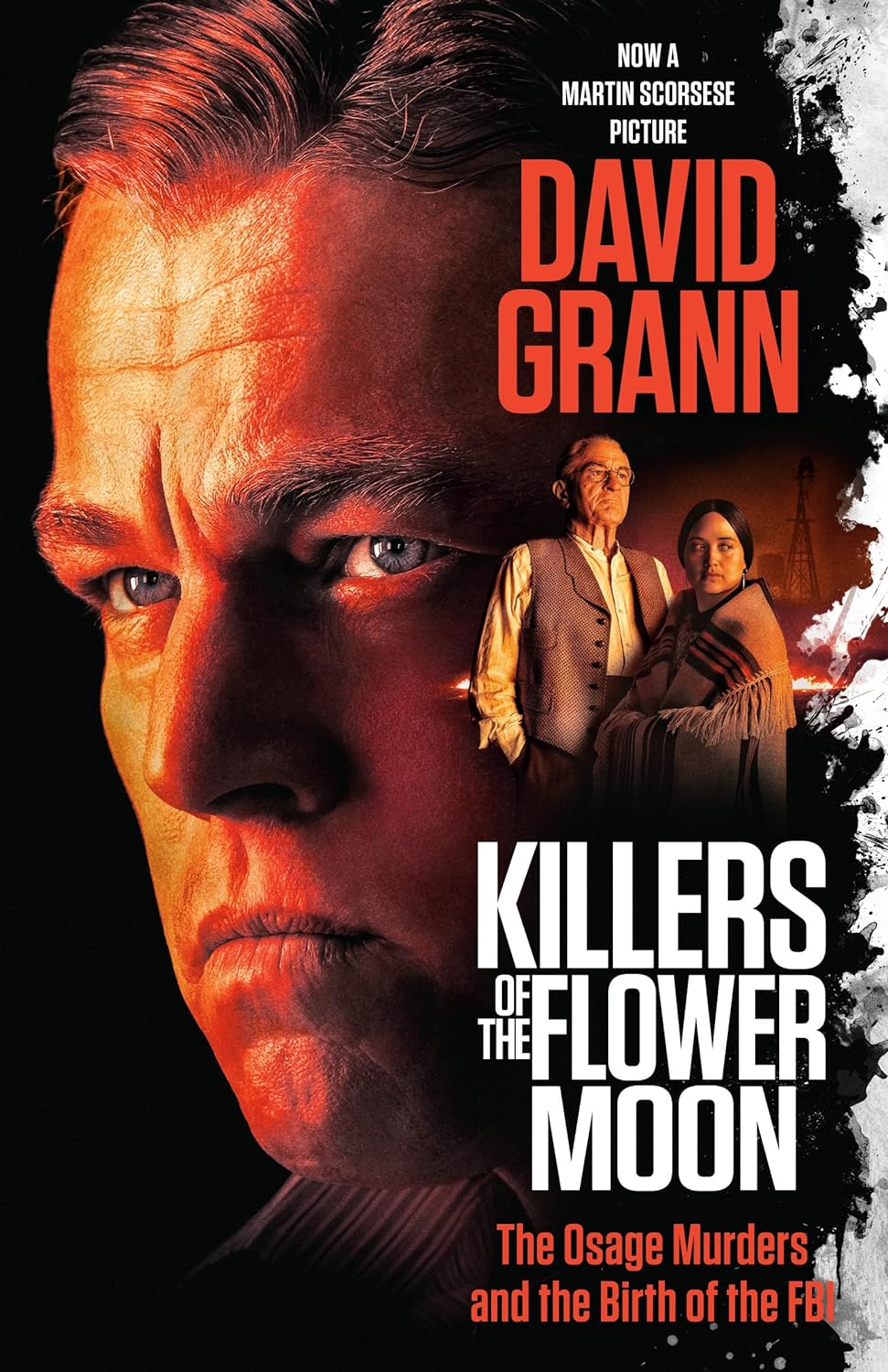
In this incredible story, the author has undertaken meticulous research in order to create a comprehensive overview of what happened to the people of Osage County in the 1920s, writes A.J. Griffiths-Jones.
A vast and seemingly barren land that the Osage Indians called home in the heart of Oklahoma, nobody could have envisaged the changes about to take place as almost overnight this tribe of close-knit Native American Indians became the richest people per capita in the world after oil was discovered beneath their land.
However, despite the minerals being found on tribal lands, the law required court-appointed white legal guardians.
 All of a sudden, the Osage had more money than they could spend, albeit monitored, and they soon discovered the white man’s opulent extravagances and turned to a lifestyle that was the complete opposite of their frugal forefathers.
Suddenly Osage men were appearing in saloon bars, their women took shopping trips in the back of chauffeur-driven automobiles and where family teepees had once taken up small plots of land, grand mansions sprang up with no expense spared in their design and décor.
However, underneath this bubbling excitement of newfound wealth, rose jealousy and resentment, which soon turned to murder, at the centre of which was the family of Molly Burkhart who soon became prime targets.
One by one members of Molly’s clan were shot and poisoned, it seemed that nobody was safe, and the wealthy homeowners locked their doors in fear. As Molly and her relatives tried to find out who was behind the killings, more Osage died, those at the centre of the investigation now becoming victims themselves.
Local law enforcement was flummoxed and unable to find any leads let alone apprehend the murderers, and admitting defeat they were forced to call in the FBI’s young new director, J. Edgar Hoover.
An undercover team were tasked with infiltrating the prospectors and oil workers who were thought to be behind the sinister events and, together with the Osage Indians themselves, exposed one of the most chilling conspiracies in American history.
The book is a compelling read, with shocking revelations and detailed descriptions as events play out, Grann’s journalistic approach to such an epic narrative being second to none and it is incredibly well written.
In 2016, Imperative Entertainment paid $5 million for the film adaptation rights, a full year before Grann’s book release. Someone obviously sensed an epic hit, as it wasn’t until 2023 that the movie was finally released, with Leonardo Di Caprio and Lily Gladstone playing the leading roles of Ernest and Mollie Burkhart.
Ernest’s uncle, William King Hale, plays a pivotal role and poses as a friendly benefactor to the Osage, and casting directors couldn’t have chosen a better actor for the role than Robert De Niro, who comes across as crafty, calculating and smooth-talking.
 Adapting a book based on such shocking events is no mean feat, but placed in the very capable hands of Martin Scorsese, who both produced and directed ‘Killer Of The Flower Moon, this film brings to light the true plight of the Osage Indians and also the catastrophic effect of the oil strike and how it almost wiped out an entire ethnic tribe.
The film is complex and with a huge cast, therefore reading the book first gives better understanding of the situation, especially regarding Osage history and the sudden appearance of the white man on their land.
Filming took place in Oklahoma in order to make the scenes as authentic as possible, and an incredibly accurate backdrop was created, but it’s in reading Grann’s prose that one can really grasp a sense of what life was like at the time.
The film run time is three and a half hours, so not for the faint-hearted, but each scene plays an essential part in understanding the gradual increase of murders, relationships between the white guardians and the Osage, and how the FBI became involved.
It should be remembered that the Federal Bureau of Investigation was founded in the United States in 1908, so was comparatively new when the Osage murders were being investigated, but Hoover was a formidable director and left no stone unturned in his handling of the case.
This book, and subsequently the film, is a must for history lovers, but also look out for Grann’s other literary offerings, as he is a brilliant researcher and has uncovered some incredible true stories from the past, weaving his magic to turn them into unforgettable reads.