
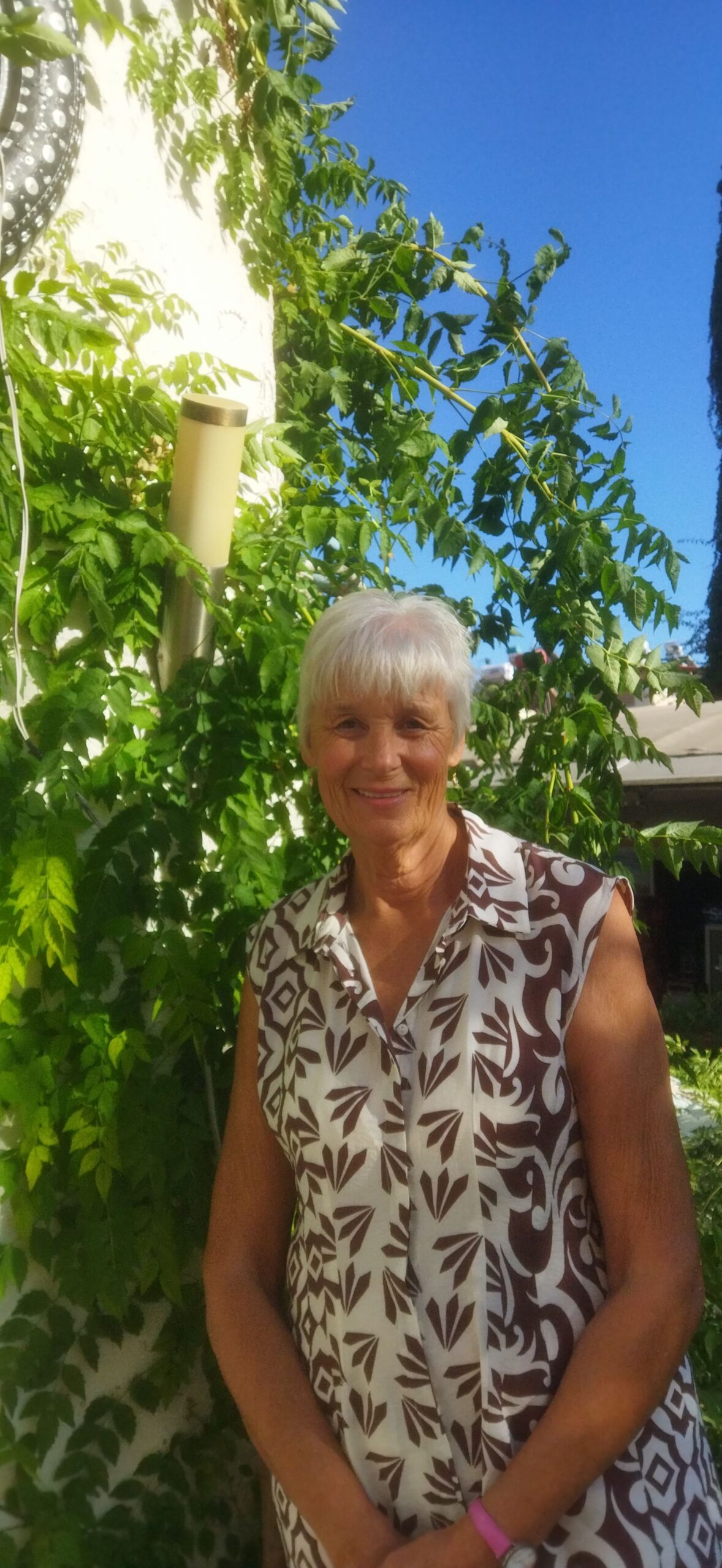
When Yolanda and her husband Nigel packed up their lives in Britain and moved to Akbük in 2005, they weren’t chasing a dream of business or adventure. They were chasing the sun.
“We wanted to live in the sunshine,” Yolanda says simply. “A friend of mine at work in the UK was having an apartment built in Altinkum, and he was paying such a good price for it that we thought, we could do this too. So we decided to retire early, come out here, and have a good life.”
That was December 2005, the same year Voices first rolled off the press. Back then, Akbük was a sleepy village on the edge of Didim, with quiet roads, a scattering of shops, and long stretches of empty beach.
“One of my fondest memories is having the beach to ourselves,” Yolanda recalls. “We knew so many local Turkish people, because there weren’t many British around. It really did feel like a village.”
Progress, step by step
 Two decades on, Akbük has changed almost beyond recognition. “The single biggest positive change,” Yolanda says, “is how much more is available now. There are proper supermarkets, more shops, and better roads. It’s so much easier to live day to day.”
Another improvement has been the rise in English speakers. “Back then, hardly anyone spoke English in the banks, the council offices, or even in the shops. Now, younger people especially speak English, which makes everything, from shopping to sorting out paperwork, a lot easier. I do speak some Turkish, but it is still helpful.”
Healthcare has improved too, at least in part. “There’s the new hospital in Didim, and new dentists have opened up in Akbük, they’re fantastic. It feels much more modern than it used to.”
A loss felt deeply
But not every change has been welcome. For Yolanda and Nigel, having to move from their local doctor’s practice in Akbük has been a real blow.
“We used to have a wonderful doctor here who spoke excellent English and looked after around 600 British patients. She knew everyone. People trusted her. She even picked up serious illnesses in some of our friends during tests. And then, suddenly, she was taken away.”
Now, residents must travel into Didim for prescriptions and appointments, fine for those with cars, but difficult for older or unwell patients. “We’ve been paying into SGK for over ten years,” Yolanda points out. “We should be able to see a doctor in Akbük. Instead, we have to travel to Didim and sometimes the doctor assigned to foreigners doesn’t speak English, and in some cases can’t even provide basic tests. It makes life much harder.”
From village to town
Akbük has undoubtedly grown busier. “People love coming here, and I can see why,” Yolanda says. “As for changes to the town itself, there are more pharmacies, more supermarkets, even an English-speaking pharmacist near the Caprice Hotel.
“But it’s definitely more crowded. Crossing the road can take ten minutes now! In 2005, it was so much quieter. That was the nice thing about it, it felt like a real village.”
Yet despite the traffic and the bustle, Yolanda still loves the place she chose as home two decades ago. “We’ve still got a good community, just like back then,” she says. “It’s different now, more modern, busier, louder. But it’s still lovely.”
From deserted beaches to traffic jams, from a handful of shops to supermarkets and dentists, Akbük has transformed since 2005.
For Yolanda, the changes have been mostly positive, with just a few frustrations along the way. But one thing is certain: the town by the sea is still home.