
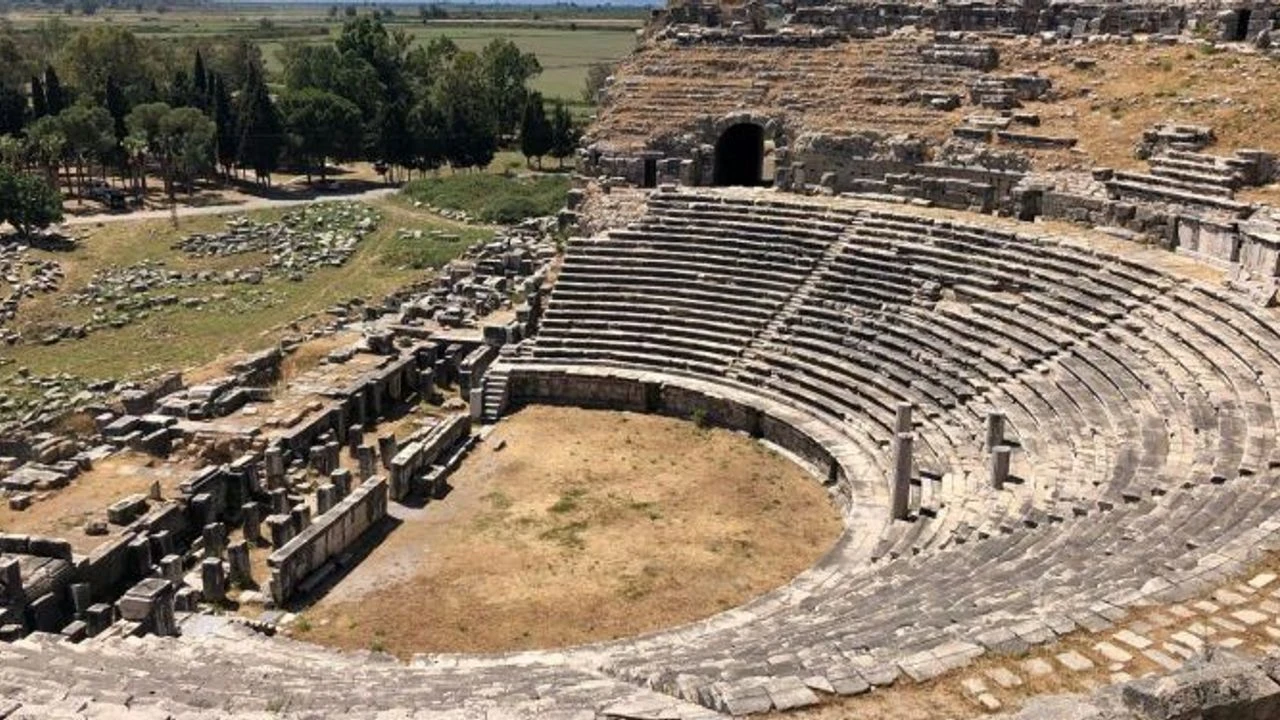
Born in the lands of Aydın, the 2000-year-old Seikilos Elegy, a symbol of eternal love for a spouse and the transience of life, retains its title as the oldest musical work that has survived intact, both in its lyrics and melody.
This unique heritage, discovered during railway construction and smuggled abroad, now awaits its return to its rightful homeland in Denmark.
Fascinating backstory
One of the most fascinating discoveries in the world of art and archaeology, and considered the oldest known complete musical composition, the “Seikilos Lament” continues to carry a universal message to the present day.
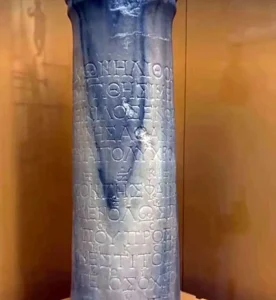 In the 1st or 2nd century AD, a musician named Seikilos, living in the ancient city of Miletus, near present day Didim, erected a tombstone to immortalize the memory of his deceased wife, Euterpe.
However, this stone was no ordinary tombstone; with the musical notes and poetic words engraved upon it, it would go down in history as the first complete work of world music.
Melody transcription
The melody, inscribed on stone using ancient Greek musical notation, has been deciphered and re-enacted in the context of modern musicology. The Turkish translation of Seikilos’s timeless song reveals the value and brevity of life:
“As long as you shine, don’t worry about anything!
Life is short and time will pay the price when the day comes…”
The inscription not only contains song lyrics and musical notes; Seikilos summarizes why he erected this monument with these emotional words spoken from the stone’s perspective: “Seikilos erected me, I am a statue of stone, my duty is to keep his memory alive forever.”
Music historians emphasize that the work is invaluable both for its philosophical depth and for its complete reflection of the technical musical infrastructure of its time.
Seikilos’ great love for his wife and this ancient philosophy inscribed in stone continue to illuminate humanity despite the centuries that have passed.
The text was performed by Greek musician Betty Harlafti at the Temple of Apollo during the recent fifth International Mediterranean Literature Days in Didim, captivating listeners in the very land where the song originated.
Story of smuggling
This rare inscription, the first complete musical notation in history, was accidentally unearthed in the 1880s during the construction of the Aydın-Izmir railway.
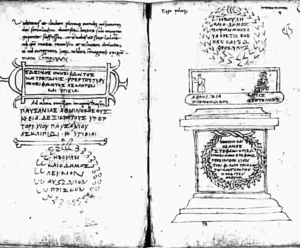 Found among the ruins of the ancient city of Tralleis, the tombstone was unfortunately smuggled out of Türkiye illegally shortly after its discovery.
Today it is on display at the Danish National Museum (Nationalmuseet). Although Turkey has become distant from this unique cultural heritage of Anatolian origin, the story of the artifact continues to resonate throughout the world.
Discovered in the mid-19th century and added to Purser’s collection, the stele is known to have passed into the collection of Purser’s lawyer, Young, who lived in Buca, Izmir, towards the end of the 19th century, and was placed under the protection of the German Consul in Izmir during the occupation of Izmir in 1922.
Later taken from Istanbul to Stockholm, the stele was purchased by the National Museum in Copenhagen in 1966 and is exhibited there.