
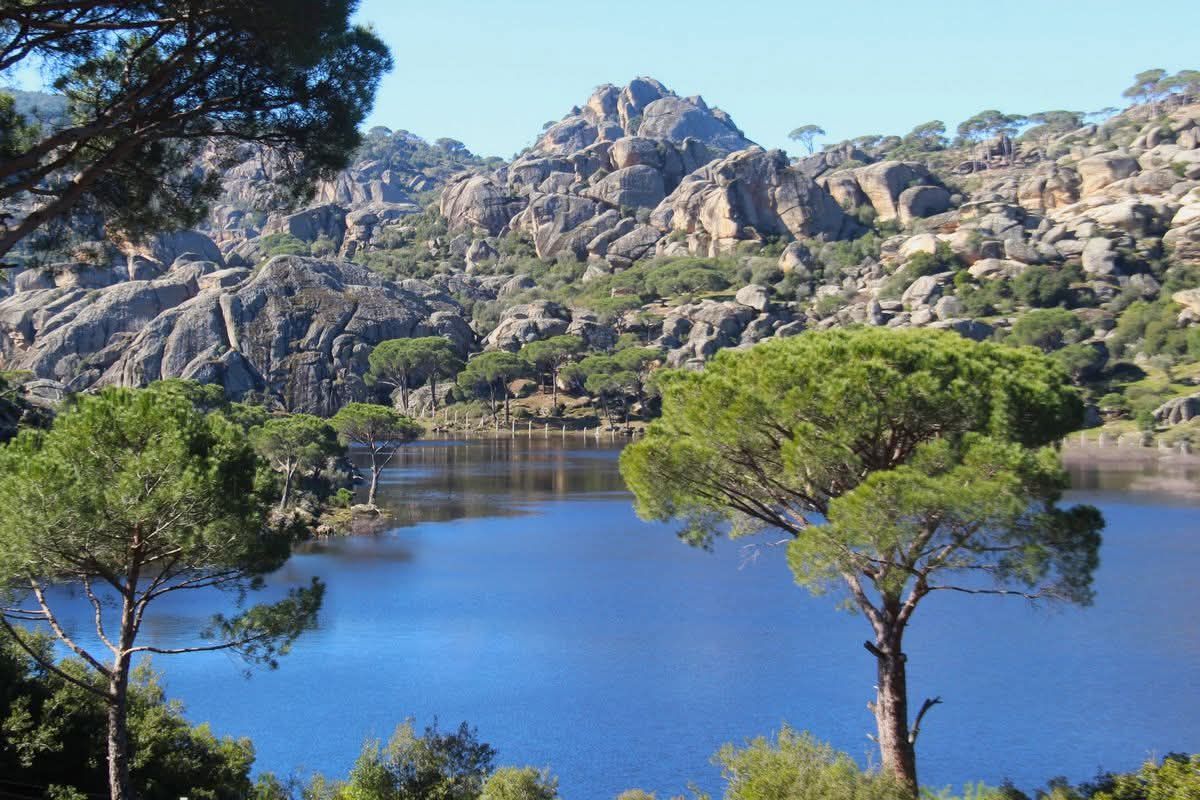
Calls are increasing for the Latmos (Beşparmak) Mountains, located on the borders of Söke, Koçarlı and Milas, to be declared a national park.
Bahattin Sürücü, President of EKODOSD, stated that Latmos, notable for its natural, cultural, and archaeological riches, needs strong protection status to preserve its valuable assets, adding that the region faces a serious threat of destruction due to increased mining activities in recent years.
Latmos, an extension of the Western Menteşe Mountains, forms a vast natural and cultural heritage site north of Lake Bafa and south of the Lower Büyük Menderes Basin.
With its natural formations from different periods, rich vegetation, wildlife, rock paintings, ancient roads, castles, monasteries, and traditional settlements, the region stands out as one of the important areas where nature and culture coexist.
Sürücü stated that the natural values of Latmos alone are sufficient for the protection of the region, and that scientific studies also reveal this richness.
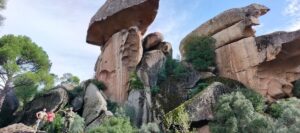 He stated that the flora of Latmos includes 296 genera, 388 species, 79 subspecies, and 29 varieties belonging to 91 families, adding that 16 endemic plant species have been identified in the region, and that this number is expected to increase with new studies.
The region is also rich in terms of wildlife, with that 180 bird, 22 reptile, 4 amphibian, and 20 mammal species identified in Latmos. Rare species, such as the swamp cat, caracal, and porcupine, live within the local ecosystem.
Sürücü stated that the Anatolian leopard was also found in the region in the past, and that stone traps, thought to have been used to catch this animal, can still be seen in Latmos.
He said that the biodiversity of Latmos reveals that the region is an important natural heritage site for Western Anatolia. Emphasizing that the value of Latmos is not limited only to its present-day natural life, Sürücü noted that the region also attracts attention with its thousands of years of history.
He pointed out that Latmos, which was a sea in ancient times and now encompasses diverse ecosystems including Lake Bafa, forests, and rocky areas, has been home to various civilizations throughout history.
One of the values that makes Latmos special on a global scale is its rock paintings, and that the Latmos rock paintings, discovered in 1994 by the German archaeologist Dr. Anneliese Peschlow, have different characteristics from similar examples in Western Europe.
Sürücü noted that the rock paintings prominently feature people, male-female relationships, and family life rather than animal figures, and that the paintings are spread across different points of the mountain. The continued discovery of new rock paintings shows that the full potential of Latmos in terms of cultural heritage has not yet been revealed.
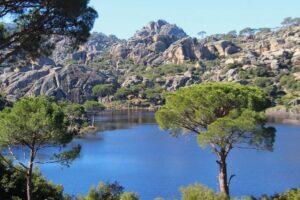 Sürücü stated that Latmos bears traces of many cultures from prehistoric times to the Hellenistic and Roman periods, and from the Byzantine to the Ottoman era, adding that ancient cobblestone roads, Byzantine castles and defensive structures, settlements, monasteries, and frescoes further enhance its historical importance.
He stated: “Latmos’ complex and fascinating rock and cave formations, seemingly piled on top of each other, harmonize with rock paintings drawn thousands of years ago, making the region one of the rare cultural and natural landscape areas in the world.”
Sürücü stated that natural pine forests cover a large area in the region, and that olive cultivation, beekeeping, animal husbandry, and to some extent tourism are among the important sources of livelihood for the local people.
Reminding that Latmos is among Türkiye’s important tourism centers such as Kuşadası, Didim, and Bodrum, Sürücü said that with its climate, natural structure, archaeological heritage, and traditional way of life, the region is one of the areas that should be considered for nature and culture-focused tourism in Western Anatolia.
Sürücü stated that an important process has been initiated regarding the declaration of Latmos as a national park, and noted that upon the proposal of the 4th Regional Directorate of the General Directorate of Nature Conservation and National Parks of the Ministry of Agriculture and Forestry, comprehensive field surveys and boundary determination studies were carried out in the region in November 2025 by the survey and inventory experts of the General Directorate of Nature Conservation and National Parks.
Sürücü, stating that EKODOSD actively contributed to these studies, said that the inspections assessed Latmos’ natural and cultural values, as well as its importance in terms of national park status.
He stated that they expect the process to be concluded without further delay following these studies, and that Latmos should be given an effective protection status.
He emphasized that the expansion of mining activities in areas without protected status poses a serious risk to Latmos’ future, saying, “No more time should be wasted in protecting the natural and cultural values that Latmos holds. If the extent of the destruction increases, there may be nothing left worth protecting in the future.”