
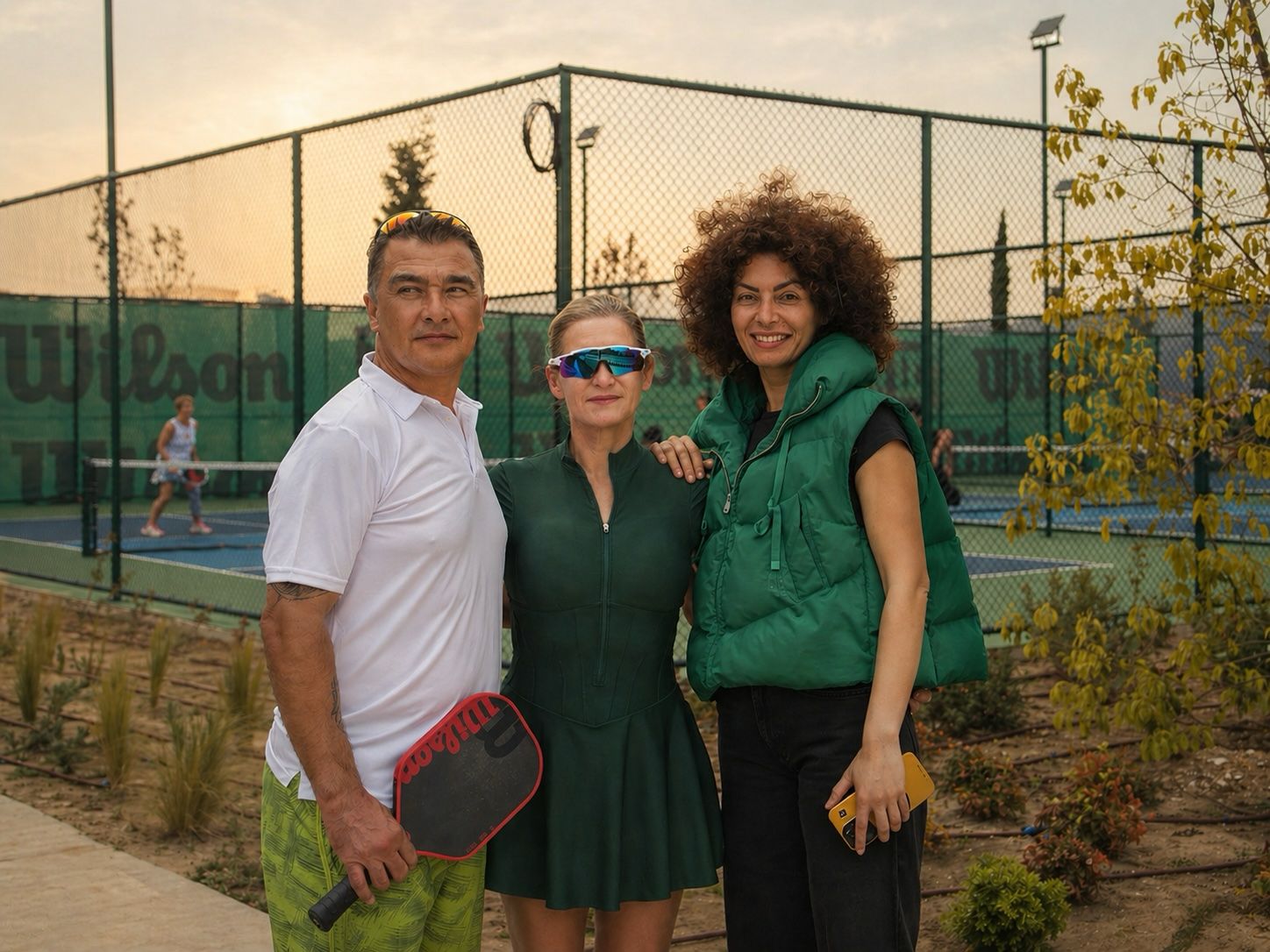
If you’ve been near a sports centre recently, you may have noticed there’s a new game in town. Played on a court similar to tennis, with a paddle and a hollow plastic ball, pickleball is fast becoming one of the world’s most accessible and fastest-growing sports. And now, thanks to a unique mix of local initiative and international expertise, Didim is beginning to carve out its place on the global pickleball map writes Laura Bower.
Originating in the United States in the 1960s, pickleball began as a backyard pastime, a hybrid of badminton, table tennis and a Wiffle ball, a ball that’s hollow, plastic and full of holes. If you’re like me and duck when you see a tennis ball shooting in your direction, you might not feel so intimidated by a pickleball. The game’s unusual name comes from the “pickle boat” in rowing, where leftover crew members are assembled into a team. Today, the sport has evolved far beyond its improvised beginnings, with millions of players worldwide and a rapidly expanding professional scene.
Despite its growth, pickleball has retained one of its original strengths: accessibility. The court is smaller than tennis, the rules are simpler, and the equipment is relatively inexpensive. Courts can be marked out on almost any flat surface, making it easy for communities to adopt. It’s this inclusive spirit that lies at the heart of pickleball’s appeal, and nowhere is that more evident than in Didim.
Voices met with UK native and Didim resident Jim Barton, founder of the charity Jimmys Tennis and now a passionate advocate for accessible pickleball in Didim & Akbük. After stepping away from competitive tennis due to injury, Jim began coaching young players with a focus on inclusivity. What started as a small initiative grew into a registered charity in June 2023, built around the principle of being “Open For All.”
Since spending time in Türkiye, Jim has expanded that ethos even further, working closely with local rehabilitation centres and individuals with disabilities. Over the past six years, he has coached people with a wide range of physical challenges, finding creative ways to adapt the sport to their needs. “Watching the happiness and pride when someone achieves something beyond what they expect of themselves is incredibly rewarding,” he says.
One of his current students is completely blind and relies on assistance in daily life. Through adapted techniques – using sound cues from both voice and ball – Jim is helping her learn to navigate the pickleball court independently. Despite the language barrier, the connection is clear: confidence, independence and enjoyment.
This grassroots inclusivity stands in powerful contrast to the high-level professional attention Didim is now attracting.
Recently, the town welcomed an impressive lineup of international pickleball figures for a four-day masterclass at the AKRA Didim hotel. Among them were US champion Megan Fudge, professional player Ryler DeHeart, England Pickleball Team head coach Rob Williams, European Master Teaching Professional Sam Basford, mental performance specialist Sam Tawse. Turkish Pickleball Committee Chair Fatih Dervent and Pickleball England head Karen Mitchell. The event, organised by PSO Travel in conjunction with Pickleball England, marked the launch of new racket sports facilities at the hotel, including eight dedicated pickleball courts.
Megan Fudge (left) and Ryler DeHear
Jim Barton, Karen Mitchell and Fatih Dervent
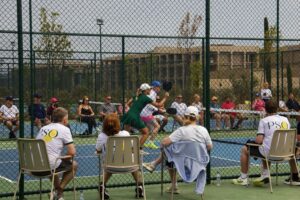
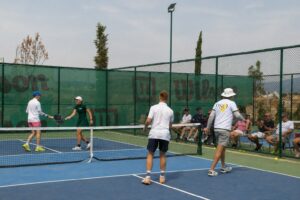
Participants in the event ranged from school-age children to retirees, highlighting the sport’s cross-generational appeal. Many come from tennis backgrounds, like Fudge and DeHeart, but were drawn to pickleball’s social nature and tactical depth. The exhibition match, played in doubles format, showcased both the athleticism and entertainment value of the sport, with live commentary from Megan as she played adding to the atmosphere and helping newcomers understand the game.
Yusuf Polat, Zuhal Polat and Ayçe Karadağ.
The event also forms part of a broader effort to grow pickleball across Türkiye. Fatih Dervent, a key figure in this development – serving as a board member of the European Pickleball Federation and chair of the Turkish Pickleball Committee – has been instrumental in introducing and expanding the sport nationally.
 Pickleball was only formally introduced to Türkiye in 2019, when two American coaches were invited to a conference. Since then, the sport has gained remarkable momentum. University championships are now in their fourth year, and unlike in many countries where pickleball tends to attract older players, in Türkiye it has found a strong following among younger people. Its affordability and ease of setup make it particularly appealing to students and community groups.
Fatih emphasised the importance of facilities like those in Didim. His goal is not only to raise awareness but also to encourage more Turkish players to train as certified coaches, enabling the sport to spread into schools and local communities.
Didim, with its mild climate and outdoor lifestyle, is ideally positioned to support this growth. Much like California, one of pickleball’s strongholds, the region offers year-round playing conditions and a welcoming environment for both residents and visitors.
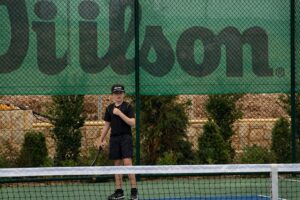
For Jim Barton, it’s also a place that feels like home. Reflecting on his early travels and eventual connection to Akbük, he describes a sense of familiarity in the landscape and the warmth of the people. It’s this combination of community spirit and opportunity that makes Didim such fertile ground for pickleball’s development.
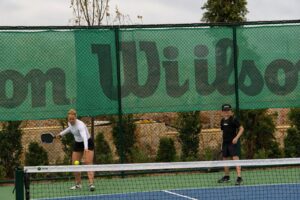
From grassroots coaching that changes lives to international events drawing global talent, pickleball in Didim is more than just a passing trend. It’s a sport bringing people together across ages, abilities and cultures—and in doing so, putting this corner of Türkiye firmly on the map.