
By Laura Bower
One of my favourite things when travelling around Türkiye is discovering that the food changes almost as dramatically as the scenery. In Didim, the Aegean kitchen rules: olive oil, tomatoes, aubergines, peppers, herbs, fresh fish, yoghurt, and olives. Home cooking leans towards things sauteed with a tomato sauce and restaurant food is very much about kebabs.
Then you go to the Black Sea. Suddenly there is corn, cabbage, butter, cheese, hazelnuts, and anchovies where you thought you would never find an anchovy. Of course, cuisine is very much affected by geography, and Turkiye’s Black Sea region has a very different climate and landscape from our sunny Aegean corner. It is wet, green and mountainous, with relatively little flat agricultural land. The cuisine has consequently developed around what grows and thrives there – particularly corn, cabbage, fish, dairy products and locally grown plants and herbs.
The tiny fish known as hamsi are maybe the Black Sea’s most famous export. If you have never been to the Black Sea, you might think of hamsi, or anchovies, as a pizza or salad topping. In the Black Sea, however, hamsi is part of a deeply felt cultural identity.
You can eat it fried and served in a fishy mandala as hamsi tava, baked into bread, cooked with rice, or turned into hamsi kuşu – literally “anchovy bird”, so-called because with a strong imagination the ovoid shape of the stuffed hamsi resembles the body of a small bird. The fish is so important to local culture you can buy hamsi-themed t-shirts, keyrings, and even pens in the shape of a hamsi.
After hamsi, the area’s second favourite staple is probably dairy. The yaylas, or mountain meadows, offer lush grazing for dairy cows, and the cuisine makes the most of the rich butter, cream and cheese that results.
Kuymak – Turkish fondue
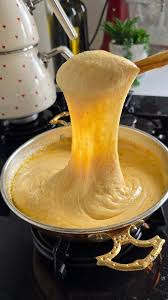 One of the most famous Black Sea dishes is kuymak, also known as muhlama or mıhlama. It comes particularly from the Trabzon area and is traditionally made with corn flour, butter and a local cheese. The ingredients are cooked slowly until they become a rich, stretchy, bubbling mixture which is eaten hot, usually with bread. It’s often served at breakfast, but like many Turkish breakfasts it’s more of a feast than a quick stopgap before rushing off to work in the morning. And it’s incredibly easy to make.
You will need:
- 2 generous tablespoons of butter
- 2 generous tablespoons of corn flour
- About 150–200g of cheese that melts well. Traditional Black Sea cheeses such as kolot or Trabzon cheese are ideal, but a mixture of mozzarella and mild Turkish cheese works perfectly well
- Around 150ml water
- A pinch of salt, depending on how salty your cheese is
- Fresh bread for dipping
Method:
Melt the butter in a small frying pan over a medium heat. Add the corn flour and stir continuously for a couple of minutes. You want the flour to absorb the butter and become lightly toasted, but don’t let it burn. Slowly add the water, stirring all the time. Keep stirring until the mixture becomes thick and smooth. Add the cheese and turn the heat down.
Now comes the important bit: don’t rush it. Keep stirring gently while the cheese melts into the corn mixture. Eventually you should have something thick, bubbling and gloriously cheesy, with the butter beginning to separate and appear around the edges. Take it straight to the table while it is still bubbling. Serve with chunks of fresh bread and eat by scooping the kuymak up with the bread. If you have managed to eat the entire pan yourself, you are probably going to need a lie down.
And there’s more
Black Sea cuisine isn’t all heavy food. The region is famous for dishes made with karalahana, or black cabbage, including black cabbage soup and cabbage leaves stuffed with minced meat. There are also numerous dishes based on wild herbs and edible plants, something that makes the cuisine particularly interesting for vegetarians. Corn is another major ingredient, particularly in the form of mısır ekmeği (Black Sea cornbread) and the use of corn meal in place of a breadcrumb coating.
Then there is pide. Of course Türkiye has pide everywhere, but the Black Sea has its own versions, with Samsun particularly famous for its regional varieties. Bafra, Çarşamba and Terme each have their own styles, with the variations ranging from deep crust versus crispy base, open like pizza or closed like calzone, and different styles of filling.
Finally, hazelnuts and black tea. Ordu and Giresun are at the heart of Türkiye’s hazelnut production, and the nuts appear in everything from desserts and pastries to spreads and sweets. The main brand that comes to mind when you think of chocolate spread is one of the biggest buyers of Turkish hazelnuts, while Rize is the centre of Turkish tea production, with around 60% of Türkiye’s tea plantations located there, and often still harvested by hand by the women of the region, using special shears and carrying the harvested leaves in a sack on their back.
So if you visit the Black Sea, expect to eat well, drink plenty of tea, and discover where everyone gets the energy for all that calorie-burning horon folk dancing!