
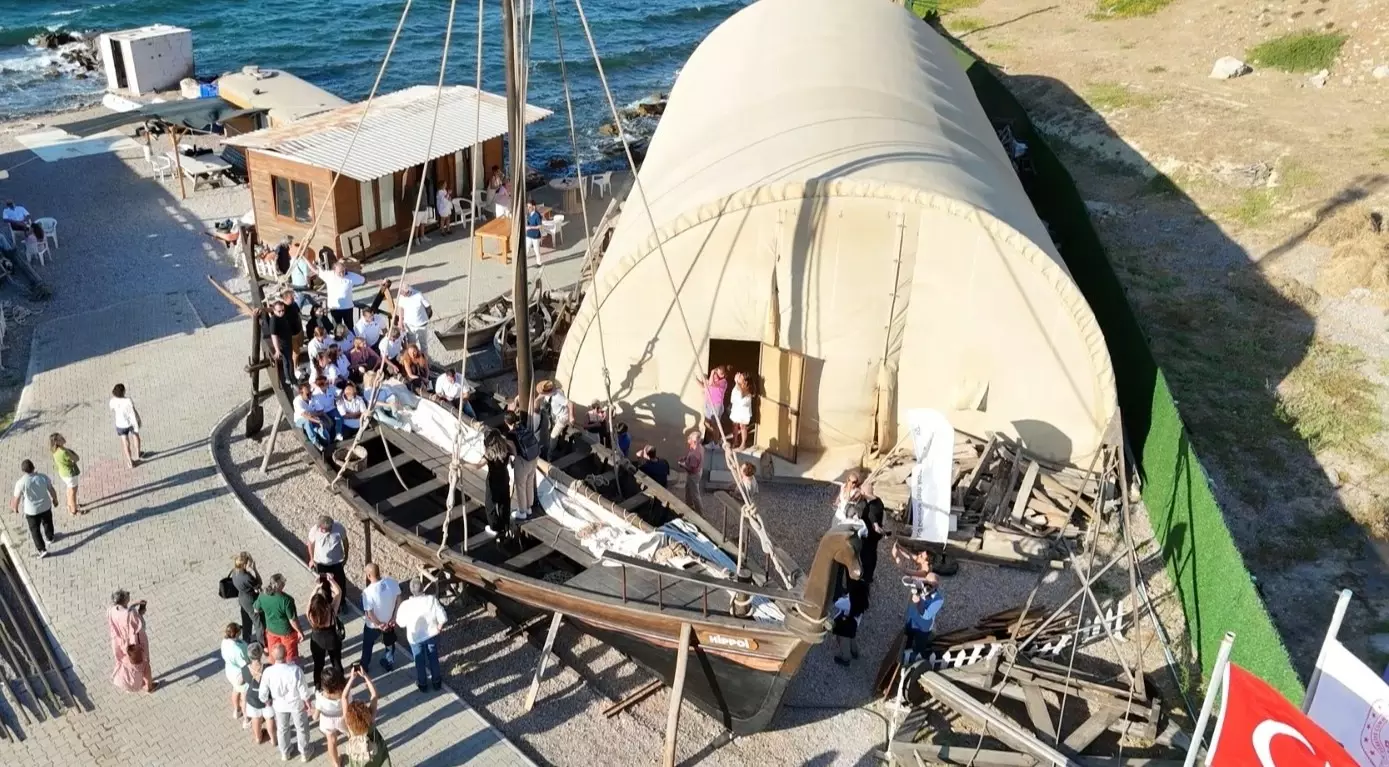
A team from Türkiye is set to bring Homer’s epic sea journey to life on the Aegean, launching a reconstructed ancient-style vessel built without a single nail and shaped by techniques rooted in antiquity.
Led by the 360 Degree Historical Research Association, an experimental archaeology nongovernmental organizaton (NGO) based in Türkiye, and backed by Enerjisa Uretim, the project aims to follow the mythic route of Homeros’ Odysseia while tying history, culture and sustainability together.
None
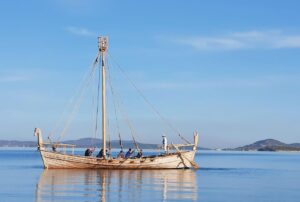
The boat’s form and symbolism draw on Hippoi vessels—horse-prowed wooden boats associated with Phoenician seamanship across the Mediterranean.
In this project, Hippoi stands as a shorthand for speed, strength, and protection at sea, and for a maritime culture that tied trade and exploration together. The team highlights the sail-and-oar build and the horse-head prow as markers of both peace and shared heritage.
Association president Mualla Erkurt describes the plan as a bridge between eras: “This journey is not only a historical re-enactment but also a call that brings together the legacy of the past and the vision of the future. It is a passage from the darkness of war to the light of peace and knowledge.”
She adds that the wooden “horse” left by the Athenians on the shores of Troy, told in the “Iliad,” may reflect the period’s real horse-prowed Hippoi tradition.
Enerjisa Uretim CEO Ihsan Erbil Baycol ties the project to renewable energy thinking: “The wind has carried not only sails for thousands of years but also humanity’s imagination and desire to explore. We are proud to support “In the Footsteps of Homer with Hippoi’ because this journey reflects our bond with culture, history, and nature.”
None
The Hippoi vessels were not heavy cargo ships but rather sleek, swift boats often used for shuttling valuable goods—most notably cedar wood—between Egypt and the Levant. Their distinctive horse-head prows gave them both a symbolic and a practical identity, marking them out as carriers of speed and prestige.
Today’s reconstruction draws on that heritage, though instead of scarce cedar, the builders are using spruce, a historically accurate alternative, shaped with the traditional dowel-tenon method that binds wooden planks without nails.
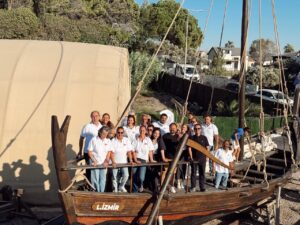
In this revival, a crew of 10 skilled sailors will manage the sails and oars much as their ancient counterparts did, bringing the vessel to life not only as a reconstruction but also as a living experiment in maritime heritage.
A launch event was held on the shores of Urla, near İzmir, where the ship is scheduled to set sail, weather permitting.