
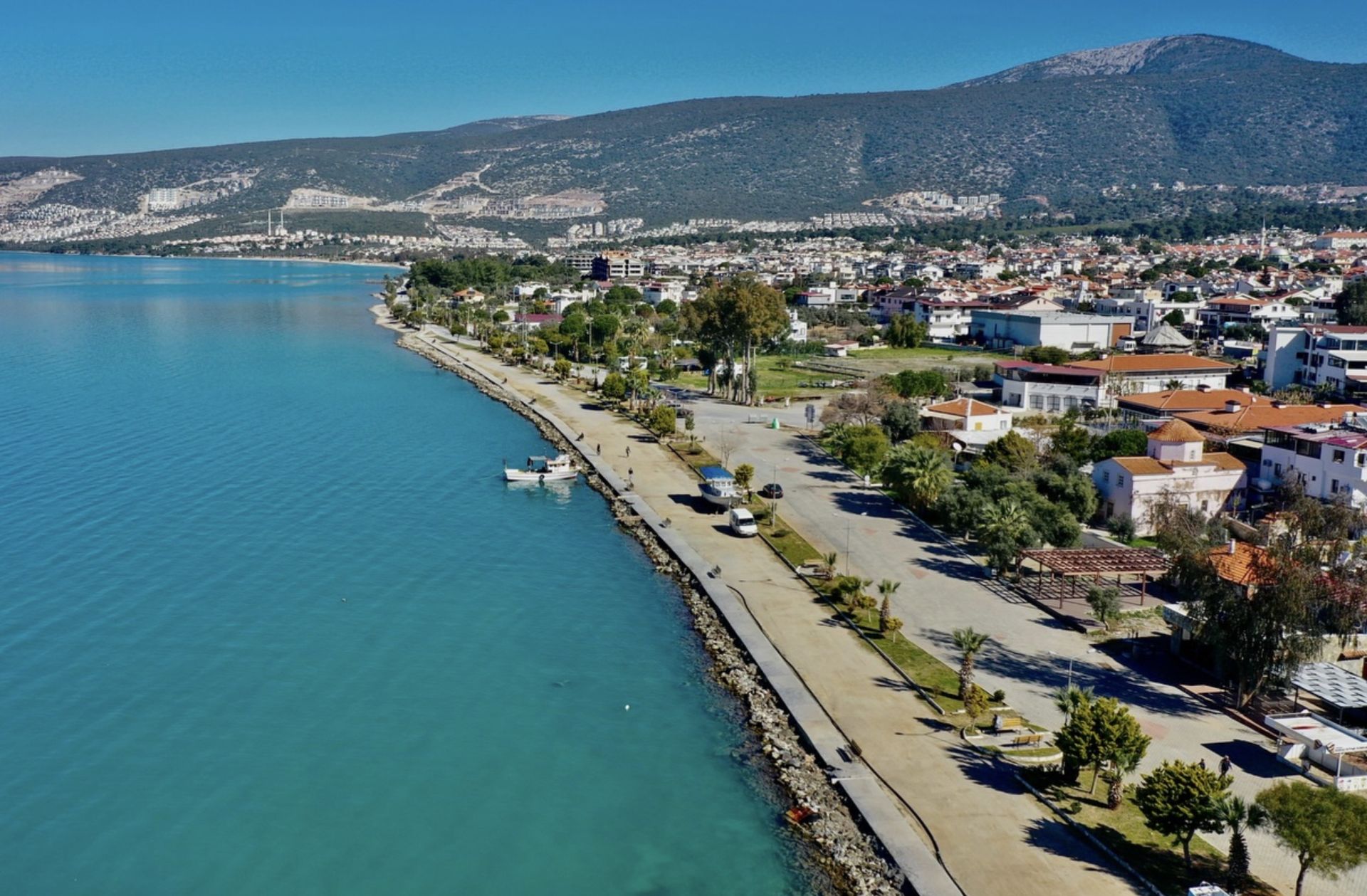
A 1 billion TL ‘reverse osmosis” system that will convert seawater into drinking water is to be built in Akbük, to tackle the chronic water shortage experienced during the summer months.
The facility will purify 10,000 cubic meters of seawater daily, with a water purification capacity of approximately 115 litres per second, meeting the water needs of 85,000 citizens. This move secures not only Akbük’s current tourism potential but also its future tourism projections for the next 25 years.
The solar-powered water treatment plant will be created and managed as part of a joint project between Aydın Metropolitan Municipality and General Directorate of State Hydraulic Works (DSİ).
 According to Turkish Statistical Institute (TÜİK) data, Akbük has a permanent population of 8,496, but this number increases exponentially during the summer months due to tourism and the influx of summer residents.
Aydın Metropolitan Municipality Mayor Özlem Çerçioğlu emphasized “environmental friendliness” while sharing the technical details of the project.
The “Reverse Osmosis” system to be used in the facility will purify seawater from dirt, salt, heavy metals, and bacteria, while the required 5 MW of electricity will be entirely supplied by solar panels (GES). In this way, the facility will operate like a “green factory,” generating its own energy and reducing its carbon footprint to zero.
Minister of Agriculture and Forestry İbrahim Yumaklı stated in a social media post that the project would be one of the first of its kind in Türkiye.
He said: “With this strategic investment, we are strengthening Akbük’s drinking water supply security and building a climate change-resilient infrastructure,” adding that the project provides an alternative “lifeline” against the risk of drought.
“With the protocol signed between Aydın Metropolitan Municipality and our General Directorate of State Hydraulic Works, we are taking a step towards realizing the Didim Akbük Seawater Desalination Plant, which will be one of the first of its kind in our country.
“This facility, which will purify 10,000 cubic meters of seawater daily and convert it into drinking water, will create an alternative and sustainable water source against the risk of drought.”
It is planned that the tender processes will be completed and the construction site will begin in the first half of this year.
The installation of electromechanical systems and the construction of the deep-sea discharge pipeline will take place in 2027. Test production will be carried out and the first water will be supplied to the network by the beginning of 2028 at the latest.