
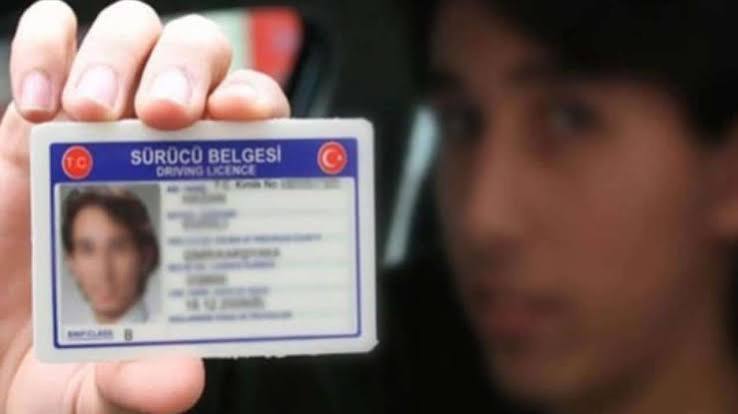
By Laura Bower – For UK nationals who spend much of the year in Türkiye, driving licence rules can be confusing.
Officially, the position is clear: foreign nationals can use a foreign driving licence in Türkiye for up to six months from the date of entry. After six months, a foreign national who wants to continue driving in Türkiye needs a Turkish driving licence as confirmed by Türkiye’s Nüfus ve Vatandaşlık İşleri (NVI) and the UK government’s guidance for those living in Türkiye.
In practice, however, many UK nationals who spend much of the year here leave Türkiye before their six months are up, spend time abroad and then return. So what are the realistic options?
OPTION 1: Keep your UK licence and leave Türkiye every six months
For many who have a UK licence, this is the simplest and least disruptive arrangement. You arrive in Türkiye, drive on your UK licence and before the six-month period expires leave the country. You return later and continue using your British licence.
This is a common practice among foreign residents, but there is an important distinction between what people routinely do and what the Turkish authorities officially state. NVI’s published guidance says foreign nationals may drive on a foreign licence for six months from the date of entry. It does not say that leaving the country automatically “resets” the six-month period for someone who is effectively resident in Türkiye. So this approach should be regarded as a practical arrangement rather than a guaranteed long-term loophole.
Advantages:
- You keep your UK driving licence, and continue using it when back in the UK;
- There is no Turkish driving test;
Disadvantages:
- Keeping track of your six-month period.
- Involves leaving Türkiye regularly.
- Your circumstances may be questioned if you are effectively living here long-term.
- There is no official NVI statement saying that repeated exits and re-entries provide an unlimited succession of six-month driving periods.
OPTION 2: Exchange your UK licence for a Turkish one
This option is for foreign licence holders who are resident in Türkiye. NVI handles the process through the population and citizenship offices (in Didim, at the Nufus Müdürlüğü), and its current guidance lists the documentation required for exchanging a foreign licence.
Advantages:
- You have a Turkish licence specifically recognised for driving in Türkiye;
- No need to rely on the six-month foreign licence period or make regular trips out of Türkiye to continue driving.
- It is a much cleaner arrangement if Türkiye is genuinely your long-term home.
Disadvantage
You give up your original UK licence. NVI states the foreign licence surrendered during the exchange process is sent back to the issuing country. That matters if you regularly return to the UK. It can be hard or expensive to insure a Turkish licence holder on a family member’s car. A Turkish licence can be used in the UK by a visitor but if you actually move back, a non-UK licence can generally only be used for 12 months from the date you become resident. For licences that cannot be exchanged, including Turkish, the driver normally needs to pass a UK driving test to continue driving.
OPTION 3: Obtain a Turkish licence separately and keep your UK licence
Instead of exchanging your UK licence, investigate obtaining a Turkish driving licence through the normal Turkish driving school and examination system. That means going through an Özel Motorlu Taşıt Sürücü Kursu (private driving school), completing the required training and passing the theory and practical examinations. This potentially gives someone who lives between Türkiye and the UK a licence for each country.
Not speaking Turkish, does not necessarily prevent a foreign resident from taking the Turkish theory examination. The 2026 MEB examination guidance specifically provides foreign language arrangements for foreign candidates. The MTSK e-exam is available in several languages, including English, and the language preference has to be arranged through the driving school in advance.
The practical driving test is a different matter, so it’s worth asking whether the school has English-speaking instructors and experience preparing foreign residents for the test.
Advantages
- You retain your UK licence.
- You obtain a Turkish licence for use in Türkiye.
- You avoid relying on repeated six-month exits.
- You have a straightforward driving document for each country.
- There are potential insurance advantages.
Disadvantages
- You have to complete the Turkish training and examination process.
- There are costs involved.
- It takes time.
- You should confirm your individual eligibility and the exact procedure with the driving school and NVI before starting.
Conclusion
There isn’t one solution that suits every UK resident. If you are already travelling in and out of Türkiye regularly, continuing to use your UK licence and managing the six-month period may be the simplest practical arrangement. But it should not be confused with an officially confirmed right to obtain a fresh six-month entitlement simply by crossing borders.
If Türkiye is your permanent home and you have little reason to retain a UK licence, exchanging it for a Turkish licence is the straightforward official route.
But if you live between the two countries and want to retain your UK driving licence, investigating a separate Turkish licence through the Turkish driving-school system could be an interesting third option.
Before making a decision, check current requirements with NVI and a Turkish driving school, and the latest rules with GOV.UK/DVLA. Driving licence arrangements can have consequences for insurance too, so tell your insurer which licence you are using and make sure you comply with its terms.