

A.J. Griffiths-Jones
Anyone interested in reading historical fiction set in or around Istanbul, will undoubtedly have encountered mention of the boza seller. Walking the neighbourhood streets at night, these vendors would stand outside apartment blocks or tall houses waiting for customers to let down a basket to be filled with a carton of thick creamy fermented wheat drink.
With its distinct slightly sweet and tangy favour, boza was often served with a sprinkling of cinnamon and a handful of roasted chickpeas. Although you can still buy boza in major grocery stores in Turkey, street sellers in this trade are becoming increasingly rare.
If you’re very lucky, however, you might catch the nostalgic shout of ‘Boozaaa’ echoing down cobbled streets on cold winter nights. So, what other professions native to Turkiye, and Istanbul in particular, are dying out and why?
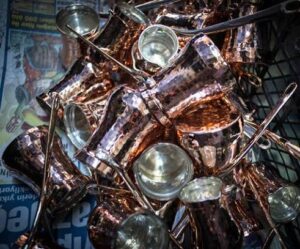 Coppersmiths are becoming rarer as the years go by, with their hand-beaten kitchen pots and decorations having to compete against cheaper more dispensable non-stick cooking items.
Although finely detailed hammered copperware can still be found inside Istanbul’s Grand Bazaar, it is only the high-end pot makers that are still able to export goods to the international market and engraved copper décor is rapidly going out of fashion.
Another job that spanned the centuries in Istanbul was that of the ‘mancaci.’ Mentioned by European travellers as far back as the 17th century, these offal sellers were employed for one sole purpose, to keep the street cats and dogs fed on a daily basis.
Trading in ‘manca’, grilled offal such as kidneys, liver and heart, they carried their goods through the city on long iron or wooden skewers. Residents could either purchase the manca directly and feed the animals themselves or pay the mancaci to do it for them. There was no guild or formal licence for this trade, it existed simply because enough people cared about the animals.
Wood-block printing and calligraphy are arts that struggle to find apprentices nowadays, with youngsters veering towards office jobs. The centuries old tradition of block printing onto textiles made of cotton or silk were famed in many areas of Turkiye, with sophisticated hand-painted ‘Kandilli’ being famed during the Ottoman period.
Traditional dyes made from peels, roots and herbs are used to create authentic colours and fine detail is added by using delicate brush strokes. Historically, production thrived in places like Gaziantep, Diyarbakir, Amasra and Kastamonu.
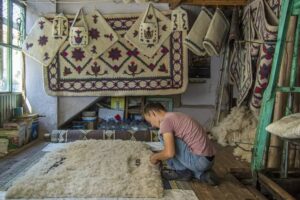 Even rarer nowadays are the ‘kececilik’ or felt-makers, who made heavy winter capes and rugs by matting wool fibres together with soap and water. Sadly, synthetic fabrics and mechanical looms have made this labour-intensive craft obsolete.
Until the end of the 19th century, shoemaking in Turkiye was done completely by hand, that is until 1884 when a shoe department was added to the Beykoz leather factory in 1884. Part of the reason for this change in manufacturing methods was fashion, with styles becoming much simpler and customers looking for pairs to be interchanged with their outfits.
Younger generations were also becoming less interested in spending years undergoing rigorous training and shops have increasingly found it hard to compete with mass-produced imported footwear.
Traditional custom-made leather shoes now only constitute around 15% of the country’s total shoe production. However, ‘Yemeni’ slippers are making something of a comeback after traditional craftsmen began modernising them with a more wearable rubber sole, attracting a new market of global tourists.
Obviously, the Industrial Revolution saw Istanbul flooded with cheap man-made goods from Europe and free-trade agreements like the Baltalimani Treaty reduced taxes on foreign imports, making local handmade goods too expensive to compete with, but can you really compare something made with love and hard graft to the throwaway trinkets of today?
Turkiye is a unique melting pot of very diverse cultures, with many areas having their own crafts that have survived the centuries, whether it be pottery, embroidered cloth, artwork or glassware, so it’s well worth keeping an eye out for family businesses trading in hand-made goods, especially if you want that one special gift or souvenir to take home and remind you of this very beautiful land.
Keep your eyes peeled while travelling in Turkiye, there might be one unique item that catches your eye and later takes pride of place in your home. The artisans that make these beautiful gifts will be grateful for each and every sale that helps to keep their craft alive.