

By Laura Bower – For anyone living in Türkiye, owning a holiday home or spending time here, there may come a point where you need help. Perhaps you are in danger, a neighbour is making excessive noise, a shopkeeper has treated you badly or you think you have been cheated.
The Turkish system can seem confusing, particularly because different authorities may appear to have overlapping responsibilities. So, who should you call and when?
First: Is it an emergency?
If there is an immediate threat or a crime in progress, or another situation requiring immediate intervention, call 112. 112 is the single emergency number, and the operator will direct the call to the appropriate service. Police, Jandarma, ambulance, fire and other emergency services are coordinated through the 112 system.
Call 112 if for example a fight is taking place; someone is threatening you and you believe the threat is immediate; you arrive home to find a burglary in progress; a person is behaving violently, or there is an immediate danger to people or serious property damage.
However, 112 is not for every disagreement. Authorities ask people to use the number for genuine emergencies. Unnecessary calls can delay assistance to those who really need it.
Zabita: Civil issues
 If the problem involves a local business, neighbour dispute, noise, public nuisance or municipal rules, the Zabıta can often be the most useful first port of call. This is particularly relevant to foreigners because Zabıta are often the people you will encounter at a local level. Their responsibilities vary according to the municipality and the issue, but commonly deal with complaints concerning businesses, prices, public spaces, noise and neighbour disputes.
Call Zabıta if your neighbour is repeatedly making excessive noise; a neighbour or business is creating another type of persistent disturbance; you have a dispute with a shopkeeper or tradesman; or a business appears to be operating improperly.
Calling Zabıta doesn’t mean they will necessarily decide who is legally right or order someone to pay you money. They may inspect, intervene, warn, record the situation or refer the matter to another authority.
In Didim, you will often see Zabıta officers on local patrol. There are Zabıta kiosks in certain tourist locations like on the main beach promenade. The department is in the ground floor of the Belediye (council offices). You can also call via the council number on 0256 811 2660.
Police or Jandarma: Crime issues
If the matter involves an actual or suspected criminal offence, Police or Jandarma are the appropriate authorities. The police generally operate in towns and cities, while Jandarma has responsibility outside Police areas, although boundaries/responsibilities can vary.
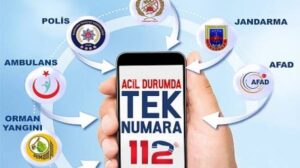 If an incident is happening and there is an immediate danger, call 112. If it has already happened and there is no immediate emergency, go to a police station to make a complaint.
Altinkum Police Station is at the south edge of Hunter’s Valley, on the Yesilkent bus route. You can also make a formal complaint to the Cumhuriyet Başsavcılığı (Public Prosecutor’s Office), which is based at the courthouse opposite the town square.
What if someone has cheated me?
If a tradesman has done a poor job and you believe the price was unreasonable that may be a consumer or civil dispute. Zabıta may still be a useful first point of contact if there is a local business or municipal issue.
However, if you transfer money to someone for a motorbike advertised online and they disappear without sending the bike and you believe they deliberately took your money through deception, this may be dolandırıcılık (fraud). Keep the advertisement, bank transfer, messages, telephone numbers and any other evidence. Contact you bank if you have made a payment and lodge a criminal complaint to the Police, Jandarma or Public Prosecutor.
Taking matters further
This is important as the first authority you contact may not be the one that ultimately resolves the dispute. For example:
Neighbour dispute: You try to resolve it. Zabıta investigates or records the complaint. If the problem continues, you may need a formal written complaint, mediation or civil legal action, depending on the nature of the dispute.
Local shop dispute: You speak to the shopkeeper. Zabıta may investigate a pricing, licensing or municipal issue. If you are seeking a refund, compensation or enforcement of consumer rights, you may need to use the consumer-protection system.
Tradesman dispute: You try to resolve it. Zabıta may deal with any municipal/business issue. If you want money back or compensation, the matter may need mediation, consumer proceedings or a civil claim.
Suspected fraud. Preserve evidence. Visit Police/Jandarma/Public Prosecutor. Criminal inquiry if appropriate. Separate legal steps to recover money or obtain compensation.
When to get legal advice
If an issue concerns a substantial amount, property, a complicated contract, or you’re unsure whether something is civil or criminal, ask a lawyer. They can help you decide if you need:
- Arabuluculuk – mediation
- İcra takibi – debt enforcement
- Tüketici Hakem Heyeti – Consumer Arbitration Committee
- A civil court, a criminal complaint, or a combination of these.
Lawyers are required to display their Bar Association license. You can verify that the license is current by checking on the Aydin Bar website: www.aydinbarosu.org.tr/baro-levhasi.
Consumer rights
The Consumer Arbitration Committee is an important formal route for consumer disputes that cannot be resolved satisfactorily. In 2026, consumer disputes below 186,000 TL fall within its jurisdiction. In Didim, Tüketici Hakem Heyeti is in the Registry Offices near the town square.
What if the problem is with a public official?
Another useful service is CİMER (Cumhurbaşkanlığı İletişim Merkezi, www.CİMER.gov.tr), the Presidential Communication Centre. CİMER provides a formal way to submit complaints, requests and reports concerning public institutions and public officials, which are then directed to the relevant authority for consideration and response.
For example, if you believe a police officer, municipal official, Tapu employee or other public official has behaved improperly, CİMER can be used to make a formal complaint. This could include an allegation that an official has asked for an unofficial payment or rüşvet (bribe), or a public authority has failed to deal properly with a legitimate complaint. Where you believe a criminal offence such as bribery has occurred, you can formally complain to Cumhuriyet Başsavcılığı (Public Prosecutor’s Office) or the appropriate law-enforcement.
Think of CİMER particularly as a way of putting a complaint about the public administration formally on record and ensuring it is referred to the appropriate authority. You can also use it when you have already approached a government department or municipality and believe your complaint has not been properly dealt with.
Keep evidence
Whatever route you take, keep evidence. If an authority attends and prepares a tutanak (official record), ask what has been recorded and, where appropriate, ask how you can obtain a copy or reference.
Don’t be afraid to ask for help simply because you are a foreigner. If you have a problem, you don’t need to arrive knowing exactly which Turkish law has been broken. Start with the most appropriate local authority, explain calmly and show your evidence.
Useful Turkish words
Zabıta – Municipal enforcement
Polis – Police
Jandarma – Gendarmerie
112 Acil – Emergency services
Şikâyet – Complaint
İhbar – Report/notification to authorities
Suç – Crime
Dolandırıcılık – Fraud
Tehdit – Threat
Gürültü – Noise
Komşu rahatsızlığı – Neighbour disturbance
Tutanak – Official record/report
Dava – Court case
Arabuluculuk – Mediation
Tüketici Hakem Heyeti – Consumer Arbitration Committee
Cumhuriyet Başsavcılığı – Public Prosecutor’s Office
CİMER – Presidential Communication Centre.